January 2016: LSA in DC, Explaining linguistics talks, Star Wars, twitter advice

I gave two talks in Washington DC, one at the LSA sister society meeting of The Association for Linguistic Evidence about explaining linguistics for forensic linguists (slides at bit.ly/explainling-lsa2016) and one at Georgetown about Writing, Talking, and Working Linguistics (slides at bit.ly/explainling-georgetown).

In the leadup to the LSA, I posted this advice post on how to “get” twitter. Also at the LSA annual meeting in DC, I held a #lingwiki Wikipedia editathon (see the report on articles edited) and did the LSA’s public relations for the weekend, including liaising with media attendees and running social media on the @LingSocAm twitter account with LSA intern Kat Starcevic. I’d also recommend checking out John Rickford’s LSA presidential address about linguistic injustice in the courtroom (in video and livetweet form).

I was quoted in several articles:

I also watched the new Star Wars movie and storified some thoughts that I and other twitter people had about how the languages make sense (spoiler: they don’t, really).

Selected blog posts:

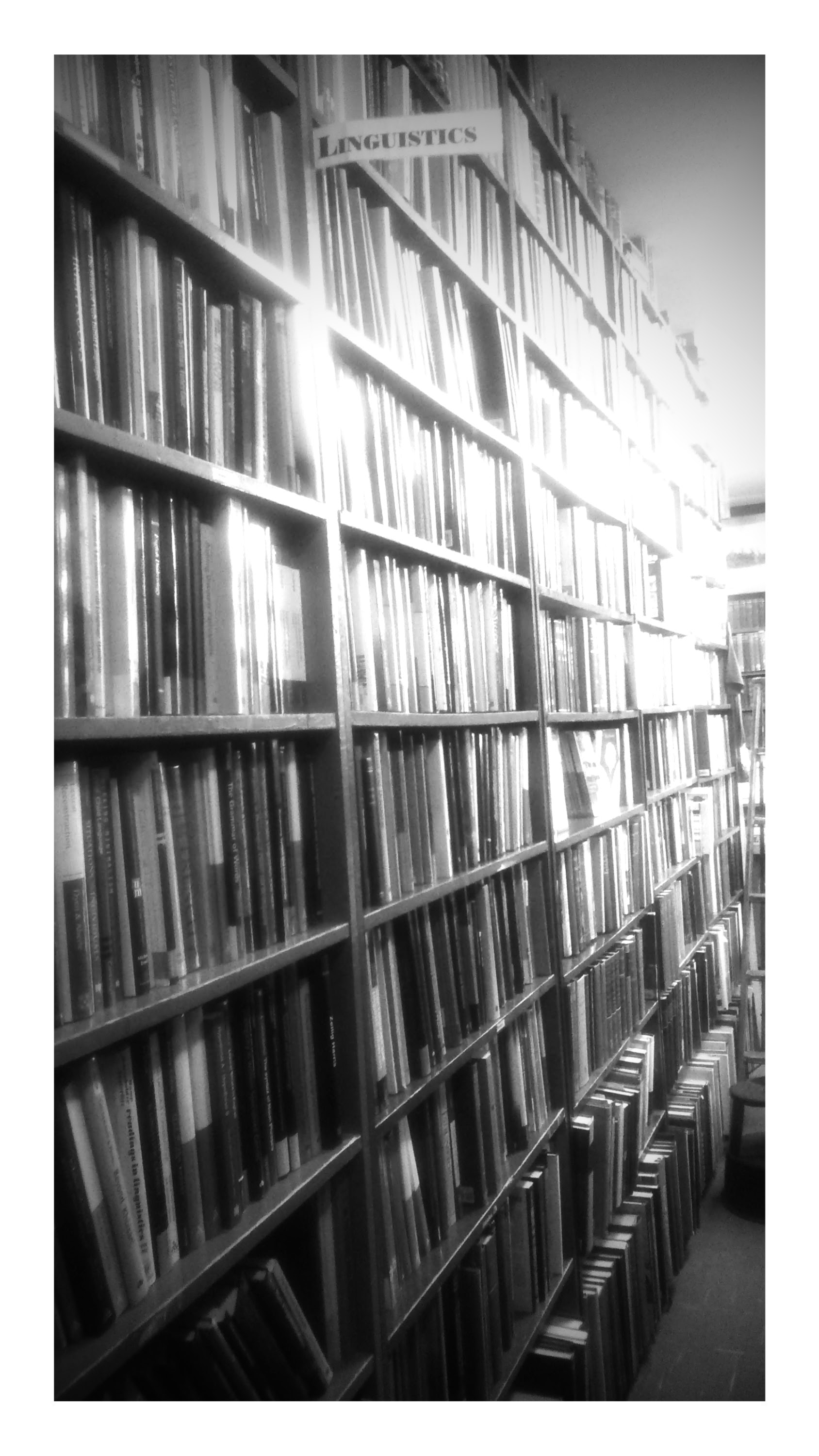
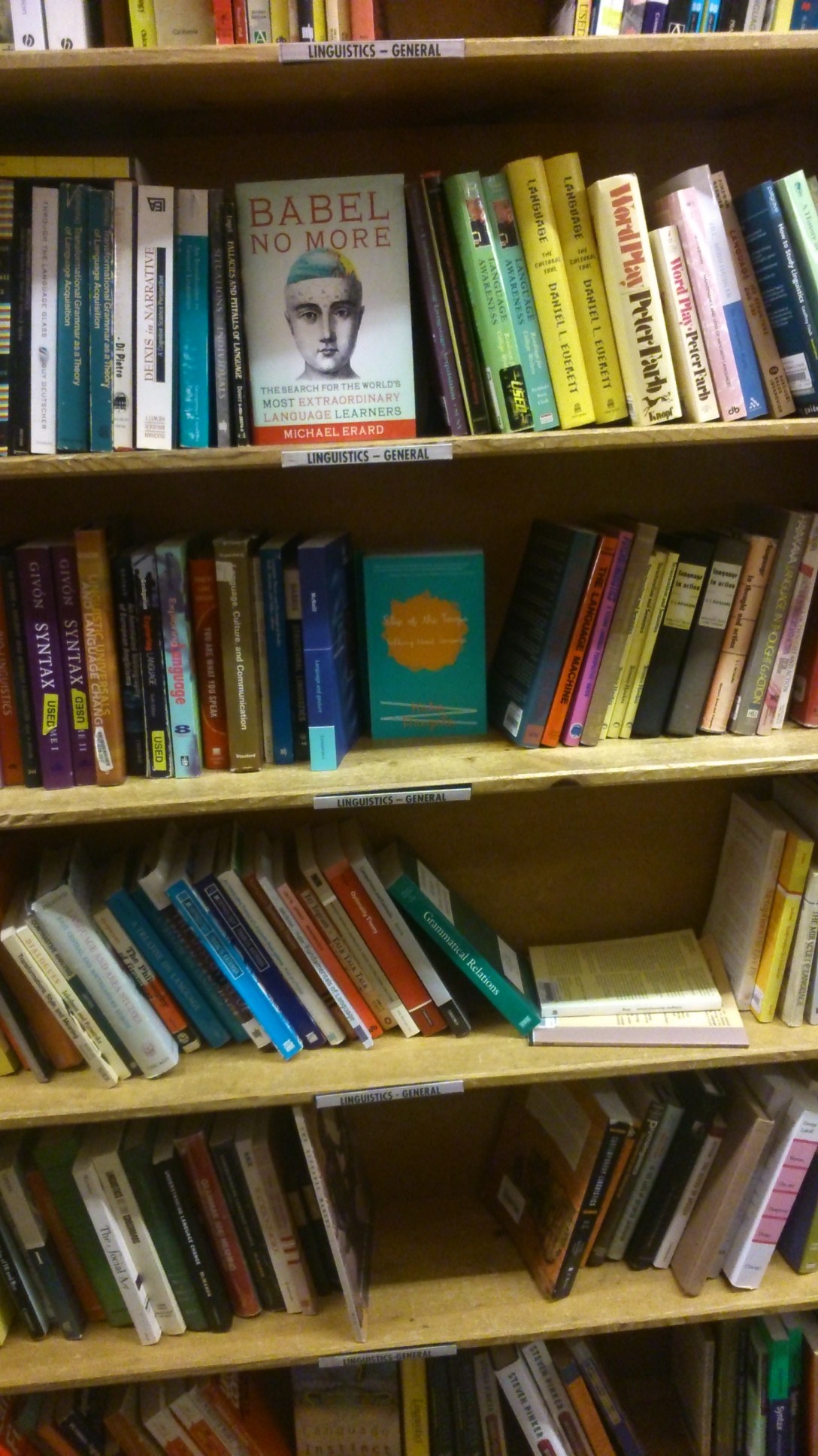
Here’s a photo I took of the linguistics section at Second Story Books in DC:

second story books dc

2015 Year in Review

Cross-posted from All Things Linguistic

I started 2015 as usual at the Linguistic Society of America annual meeting in Portland, Oregon, where I talked about the linguistic community on Tumblr on the Popularizing Linguistics via Social Media panel. I was also a mentor at a linguistics careers networking event, ran the first linguistics Wikipedia editathon, and livetweeted on #lsa2015.

Book announcement

In December, I announced that I’m writing a book on internet language for Riverhead (Penguin). Details are still to come, but I’m excited to finally be able to talk about this project I’ve been working on all year!

Online Writing

I wrote three articles for The Toast, on internet sarcasmthe linguistics of ship names (how names like Johnlock and Brittana and Dramione get put together), and revisiting the classic handbook of cutting-edge nineties internet language, Wired Style.

In February, I ended my writing and editing for Slate’s Lexicon Valley, and in March I started writing a series on internet language for Mental Floss. Here are some of my favourite pieces for Mental Floss:

I started writing for Dictionary.com (Can an inhaled word mean something?) and for Quartz, about how young women have been linguistic disruptors ever since Shakespeare and nominating singular “they” for Word of the Year 2015 – we’ll see how it goes when I’m at the official American Dialect Society vote in January!

I continued writing for Strong Language, the sweary blog about swearing, about how the new voice transcription feature in Google Docs censors some swear words (which got picked up by a lot of news outlets: Wired, Gawker, The Register, Fusion, The Daily Dot, and Business Insider), and two posts about expletive infixation, on why you can’t say “abso-jesus-lutely” or “abso-hallelujah-lutely“.

Interviews

I did a lot of interviews this year, especially about internet language. Highlights:

Radio:

I was on NPR Youth Radio and All Tech Considered on emoji, and the Kojo Nnamdi Show on internet dialects?, plus two national Drive programs, in Canada (CBC), talking about emoji and Australia (ABC), talking about language on Twitter.

Lists:

All Things Linguistic made Bab.la’s list of Top 25 Language Professionals Blogs.

My articles appeared on several roundup lists of best posts, including my grammar of shipping piece on The Toast’s 2015 list, and my grammar of doge and syntax of fuck pieces on The Electric Typewriter’s 2014+2015 list.

I was profiled in Unravel Magazine about popularizing linguistics and writing about internet language.

#lingwiki

Including both Wikimedia-sponsored and non-sponsored grants, I ran 10 #lingwiki editathons in 2015, in which over 200 Wikipedia articles were created or edited by over 200 linguists.

Speaking & Conferences

Videos

I collaborated on four LingVids videos with Caroline Andrews, Josh Levy, and Leland Paul Kusmer, which went up in March-June:

I co-wrote five Language Files videos with Tom Scott, which went up in May and June:

Top Posts

All Things Linguistic got a new theme in January, with a big header image featuring a photo I took of the linguistics section at the Montague Bookmill. Here are some of my favourite posts of the year, loosely organized by category:

Language and Society

Linguistic Fun

Internet Language

Roundups and Advice posts

Book reviews

Meetups

We had a tumblinguist meetup at the LSA annual meeting in January and at Lingstitute in July (here’s a picture of our hands with wugs drawn on them from the lingstitute meetup).

At the end of August, I started a linguistics meetup group, Linguists@Montréal, loosely inspired by Linguistics in the Pub, and we met up twice a month thereafter. If you’re a linguist living in or visiting Montreal, feel free to join the Facebook group or check it out to see if there’s an event happening when you’re around!

In January, I’m heading to the LSA annual meeting, this year in Washington DC, where I’ll be livetweeting on #lsa2016, attending the Word of the Year vote #woty15, and running an editathon. New this year, I’ll also be doing media relations for the LSA at the meeting, so you can catch me on the LSA’s official Twitter account in addition to my own. (And, of course, in person — do feel free to say hi if you know me from the internet!) I’ll also be sticking around afterwards to give a talk at Georgetown about explaining linguistics.

Curious about what I did and posted about in previous years? Check out my highlight posts from 2014 and 2013

October 2015: SXSW accepted, Polyglot Conference, NELS & NWAV editathons, and storifies

My SXSW panel with SwiftKey about the linguistics of emoji was accepted!

I did three Wikipedia editathons, at NELS in Montreal, NWAV in Toronto, and at Queen’s in Kingston. Here’s a summary of all three editathons. The NELS editathon was my last under my Inspire grant from Wikimedia, and it also got picked up in Concordia’s news service which led to me doing an interview about it with CBC Homerun.

I attended Polyglot Conference in New York City, which I’ve storified the livetweets from. I also storified my livetweeting of Rainbow Rowell’s new book, Carry On, as well as a linguistic parody of Taylor Swift’s Blank Space that I wrote a while back.

Articles for Mental Floss:

I did interviews for a number of articles:

And several of my previous articles got picked up elsewhere:

Selected blog posts:

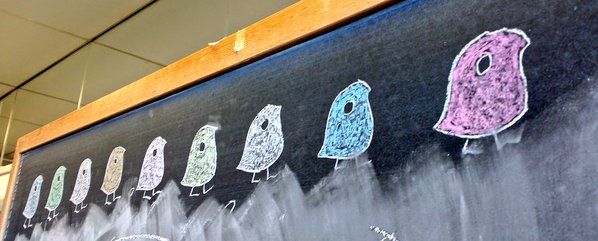
I took so many cute wugshots this month I couldn’t pick just one. Here’s a series of crocheted wugs which Concordia linguistics student Caitlin Stahl made and brought to NELS, a wug I drew on a children’s magnetic toy in a store in NYC, and a line of marching wugs from a blackboard in the University of Toronto linguistics department.

crocheted wugs wug toy wugboard

September 2015: Ship names, radio Drive interviews, swearing in GDocs, and Linguists@Montréal

I did two radio interviews this month, both of which happened to be national Drive programs, in Canada (CBC), talking about emoji and Australia (ABC), talking about language on twitter. You can listen online at their respective links.

I had a Toast article go up about the linguistics of ship names — how names like Johnlock and Brittana and Dramione get put together.

Articles for Mental Floss:

I wrote an article for Strong Language about how the new voice transcription feature in Google Docs is censoring some swear words, which got picked up by a lot of news outlets: Wired, Gawker, The Register, Fusion, The Daily Dot, and Business Insider.

One of my blog posts on All Things Linguistic, about “you’re welcome” versus “no problem” and phatic communication, got picked up by Buzzfeed and turned into a gif-post.  The Quartz article I wrote last month about young women’s speech also got picked up in an article at New York University.

I started a linguistics meetup group, Linguists@Montréal, loosely inspired by Linguistics in the Pub, and we had our first few inaugural events. If you’re a linguist living in or visiting Montreal, feel free to join the Facebook group or check it out to see if there’s an event happening when you’re around! (There will be a pub night the Thursday before NELS.)

Selected blog posts on All Things Linguistic:

Upcoming: I’m going to three conferences in October, Polyglot Conference in New York City, NELS in Montreal, and NWAV in Toronto. Details here, but I’ll be livetweeting using the hashtags: #pcnyc15, #nels46, and #nwav44 if you’d like to follow along!

Here’s a bookshelfie I took at Powell’s in Hyde Park when I was in Chicago in July, with some fancy filters:

linguistics bookshelf powells bw

August 2015: SXSW proposal, language disruptors, vintage internet slang, back-to-school link roundup & linguistics + X

I’ve started working with SwiftKey, a mobile keyboard app company, on analyzing some of their extensive data on how people use emoji. We’ve got a panel proposal up for South by Southwest Interactive which you can see more details about and vote for, if you’re so inclined.

I wrote my first piece for Quartz, about how young women have been disrupting language ever since Shakespeare, and it got picked up by the Smithsonian Magazine.

I revisited the classic handbook of cutting-edge 90s internet language, Wired Style and wrote about its retro internet slang and how I became a descriptivist for The Toast and then explored further vintage slang from it in a follow-up on Mental Floss. I also wrote for Mental Floss about the two kinds of hashtags, index and commentary.

I livetweeted my thoughts about an advance copy of David J. Peterson’s The Art of Language Invention, which I’ve summed up in a Storify (with sneak peeks of the book).

I published a back-to-school link round up on All Things Linguistic, as well as a career advice post, Linguistics + X.

Selected blog posts:

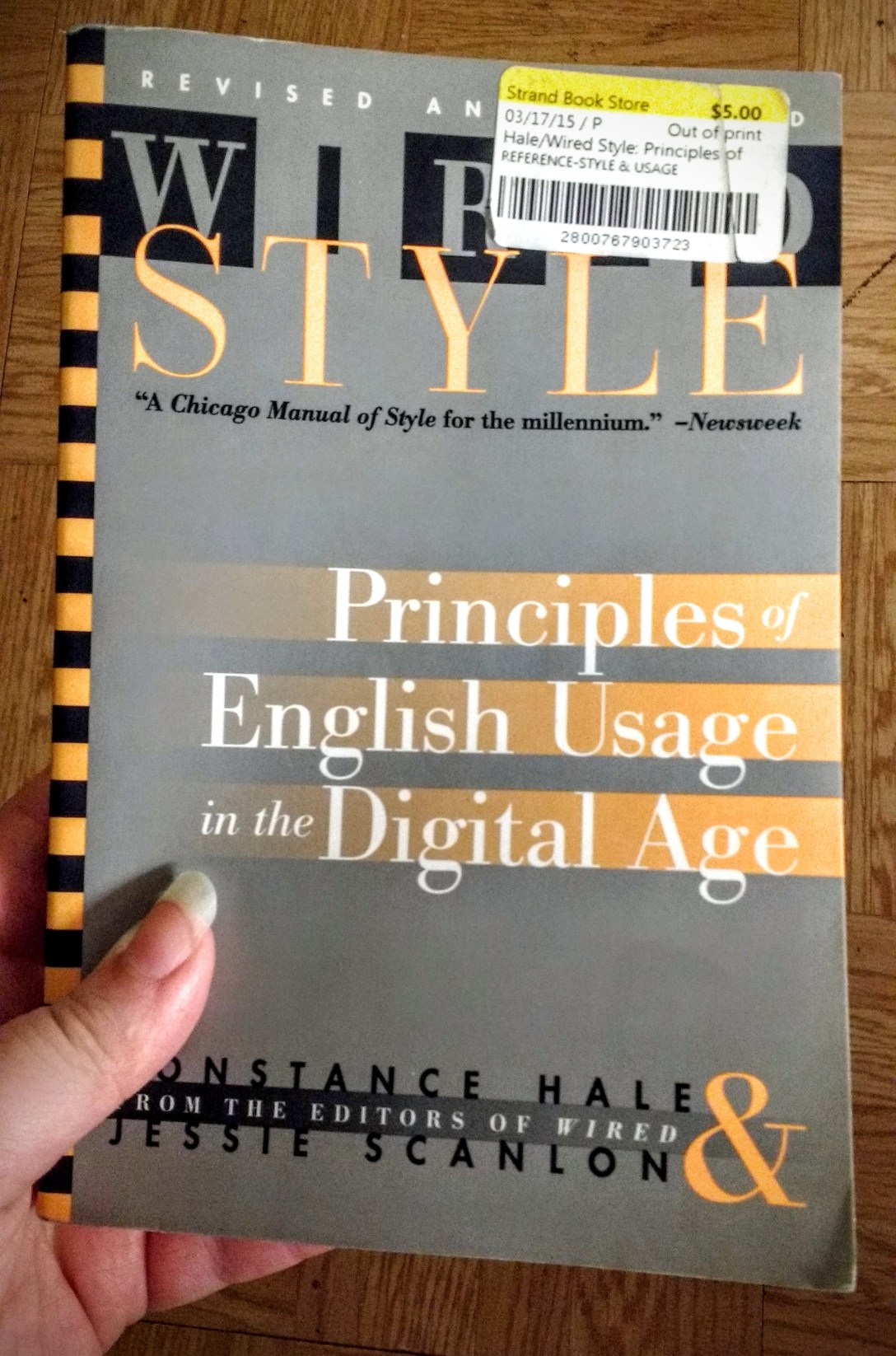
Here’s a picture of my paper copy of Wired Style that I hunted down secondhand since it’s now out of print. wired style

July 2015: Lingstitute, four #lingwiki editathons, and stub sorting

In July 2015, I attended the month-long LSA summer institute (aka lingstitute) at the University of Chicago. My primary purpose there was to run four, weekly editathons to improve linguistics-related articles on Wikipedia. There were a total of 76 participants and 50 articles improved in 5 languages — for more details, see the report here. Many thanks to everyone involved!

We also had a tumblinguist meetup at lingstitute, and here’s a picture of our hands with wugs drawn on them. I livetweeted many other lingstitute events, which can be found on twitter. Plus, a lingstitute-inspired survey about what your favourite vowel is.

Shortly before lingstitute, Emily Temple-Wood (Wikipedia User:Keilana) and I created a wug-tastic linguistics stub sorting guide, for those who may be interested in contributing to linguistics-related articles on Wikipedia but don’t know much about linguistics — and it’s already seen some use at the editathons!

Articles:

Selected blog posts:

I took this picture at the Seminary Co-op bookstore at UChicago. The linguistics and Marxism sections are right next to each other — I was told it’s so that all the Chomsky can be together.

seminary coop bookshelf linguistics+marxism

April 2015: Wikimedia #lingwiki grant, language is open source talk, resources for high school teachers, and IPA Scrabble

IPA Scrabble set

I received a grant from Wikimedia to fund the upcoming #lingwiki editathons in May (at the CLA in Ottawa), July (at the LSA summer institute in July), and October (at NELS in Montreal). You can see the grant information here: Linguistics Editathon series: Improving female linguists’ participation and representation on Wikipedia. The grant was funded through Wikimedia’s Inspire campaign to improve the gender gap in Wikipedia editing, which was a great fit considering that a lot of fantastic female linguists have participated in previous lingwikis, and many articles about notable female linguists have already been added. I’m excited to see more articles in that area as well as our other two categories of under-documented languages and linguistics stubs improved in the three upcoming lingwikis.

I gave a lightning talk called “Language is Open Source” at AdaCamp Montreal, a conference for women in open source and open culture. You can read the full text here. I also facilitated a round-table session about linguistics at AdaCamp — turns out there are a quite a lot of former linguists in tech!

I wrote two articles for Mental Floss:

I compiled a resource post for high school teachers who want to do linguistics activities with their classes. Feel free to share with any high school teachers in your life!

The second episode of Ling Vids came out, on what “wanna” tells us about how sentences fit together:

Selected blog posts:

I also posted some gorgeous photos of an IPA Scrabble set that the Yale Undergraduate Linguistics Society made (see all the pictures here):

IPA Scrabble set
IPA Scrabble picture courtesy of YULS

January 2015: Tumblinguists, LSA editathon report, WOTY, interviews, and an excellent shelf of books

Powell's linguistics section, continued

I started the year at the Linguistics Society of America’s annual meeting in Portland, Oregon, where I spoke on a panel about popularizing linguistics in online media. I represented tumblr and tumblinguists, and you can view my slides online here; I’m told there will also be a video online eventually, so I’ll link to that whenever it’s up. I also organized a Wikipedia editathon to improve linguistics-related articles, which had 27 participants and improved at least 41 articles. Editathon links:

I’m currently organizing a second editathon to take place online around the #lingwiki hashtag. Please fill out the doodle poll here if you want your time preferences/timezone to be taken into consideration when scheduling it.

Several interviews with me (and various other linguists) are now online:

And I’m not interviewed, but I’m one of the many linguists that you can spot in this Word of the Year newsclip from Al Jazeera.

I also wrote several posts about the American Dialect Society’s Word of the Year vote on Lexicon Valley:

Selected blog posts

[Update: I forgot to mention that All Things Linguistic also now has a new theme, with a large header image like all the cool kids these days.]

Here’s a picture that I took in Portland at Powell’s Books — I’ve never seen such a large linguistics section at a general-audience bookstore (and this picture doesn’t even include all of it!). The linguistics section was pretty picked-over by the time I got there on Sunday, but I heard that several linguists found some good deals!

Powell's Portland linguistics section
Part of the linguistics section at Powell’s Books in Portland. They even separate out linguistics from usage guides and “fun facts about language” books. I’m a fan.

2014 Year in Review

Cross-posted from All Things Linguistic.

What a year! I finished my MA in linguistics at McGill at the end of 2013, so in 2014 I started writing linguistics for a general audience full time. By comparison, here’s 2013’s (much shorter!) highlights post.

I started the year at the LSA in Minneapolis, where “because x” — which I’d written several posts about — was voted Word of the Year for 2013.

I wrote A Linguist Explains the Grammar of Doge. Wow. It was my second article for The Toast and currently has nearly 50k shares (wow.) Related: the article summarized as a doge image, the second generation of internet language, Dogeblanca, French doge, wuge, and my interview with the BBC.

Further Toast pieces included:

In the spring, I became the editor of Slate’s language blog, Lexicon Valley. Here are a few of the posts that I wrote (full list here).

I also had the privilege of working with many great writers on Lexicon Valley. It’s hard to pick, but here are a few posts by other people. (See also this summary of top Lexicon Valley posts from 2014.)

I continued writing for Grammar Girl, and also started writing for The Week and Schwa Fire. Selected posts:

I did an interview with Steven Pinker and reviewed his recent book The Sense of Style

I wrote several series of blog posts:

I wrote several individual advice posts:

Notable posts on language and society:

On language, the internet, pop culture, and fan-guistics:

General interest:

In the “linguists gonna ling” category, I became part of the group blog Strong Language, a sweary blog about swearing. In addition to the LSA annual meeting, I gave a keynote on internet syntax at McCCLU and attended SULA, NWAV, and NELS.

At a meta-blog level, I celebrated my two-year blogiversary and 1000th post on All Things Linguistic, and wrote an FAQ. I also started publishing monthly summary posts of my linguistic activities, blog-related and not, on my personal website, so you can check those out if you’re worried about missing anything major.

Upcoming: I’ll be starting next year as usual at the Linguistic Society of America annual meeting in Portland, Oregon in early January, where you can catch me on the Popularizing Linguistics via Social Media panel, at a linguistics careers networking event, running a Wikipedia Editathon, and of course generally in the hallways and on #lsa2015. I’m bringing my copy of linguistsagainsthumanity and I hear there may be a few other ling-games brought, so feel free to bring any games you have and/or join us (probably in the lobby or other common area) if you see people playing!

December 2014: Swearing, explaining linguistics, and more Cabin Pressure

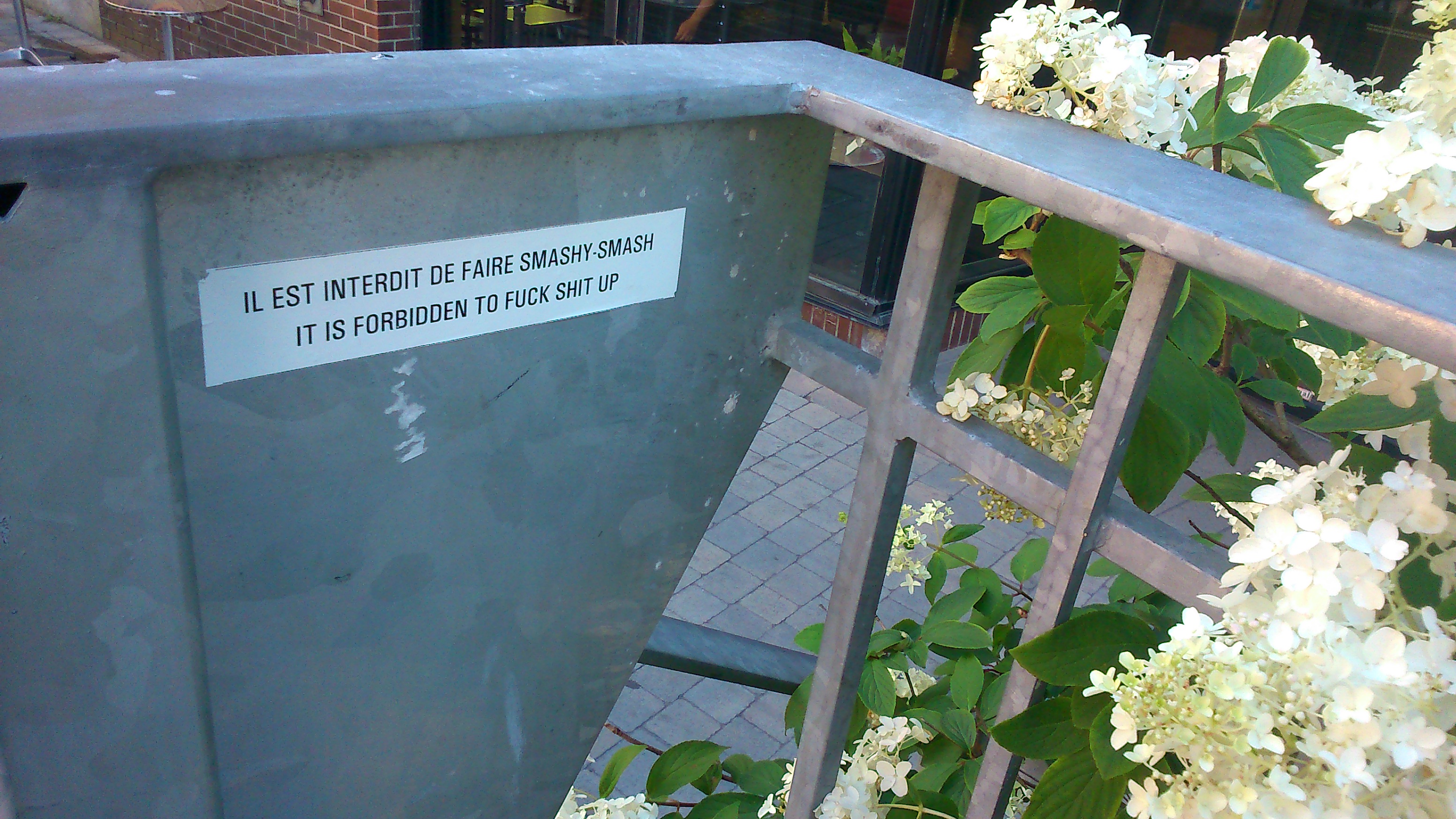
I wrote an article on the syntax of fuck for The Toast, reviving the classic paper, “English Sentences Without Overt Grammatical Subject”. I also joined Strong Language, a new blog about the language of swearing, and wrote a post about this delightful bilingual sticker that I snapped a photo of in Montreal. The comments on both the original wordpress post and my subsequent cross-post to tumblr are very much worth it for further commentary.

Il est interdit de faire smashy-smash. It is forbidden to fuck shit up.
Il est interdit de faire smashy-smash.
It is forbidden to fuck shit up.

I made a link round-up with resources for how to explain linguistics to your friends and family this holiday season, which was resoundingly popular on facebook (perhaps from linguists hinting to their friends and family!)

I continued my blog series on the linguistic aspects of Cabin Pressure, which ultimately came to the attention of John Finnemore, who writes and acts in the show.

For Lexicon Valley highlights, see this list of the top posts of 2014.

Selected blog posts:

Upcoming: Wikipedia editathon and panel about popularizing linguistics online (I’m representing tumblr) at the Linguistic Society of America annual meeting in Portland, Oregon next week.